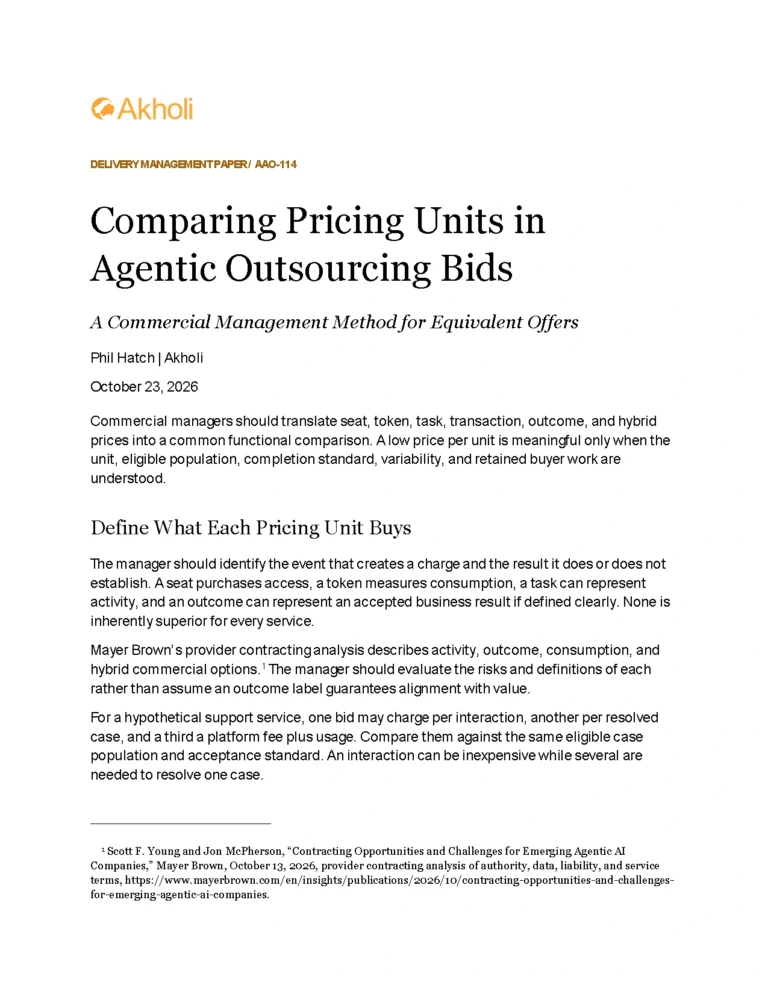
Commercial managers should translate seat, token, task, transaction, outcome, and hybrid prices into a common functional comparison. A low price per unit is meaningful only when the unit, eligible population, completion standard, variability, and retained buyer work are understood.
Buy-side Delivery and Vendor Managers Cross-industry · 4 pages
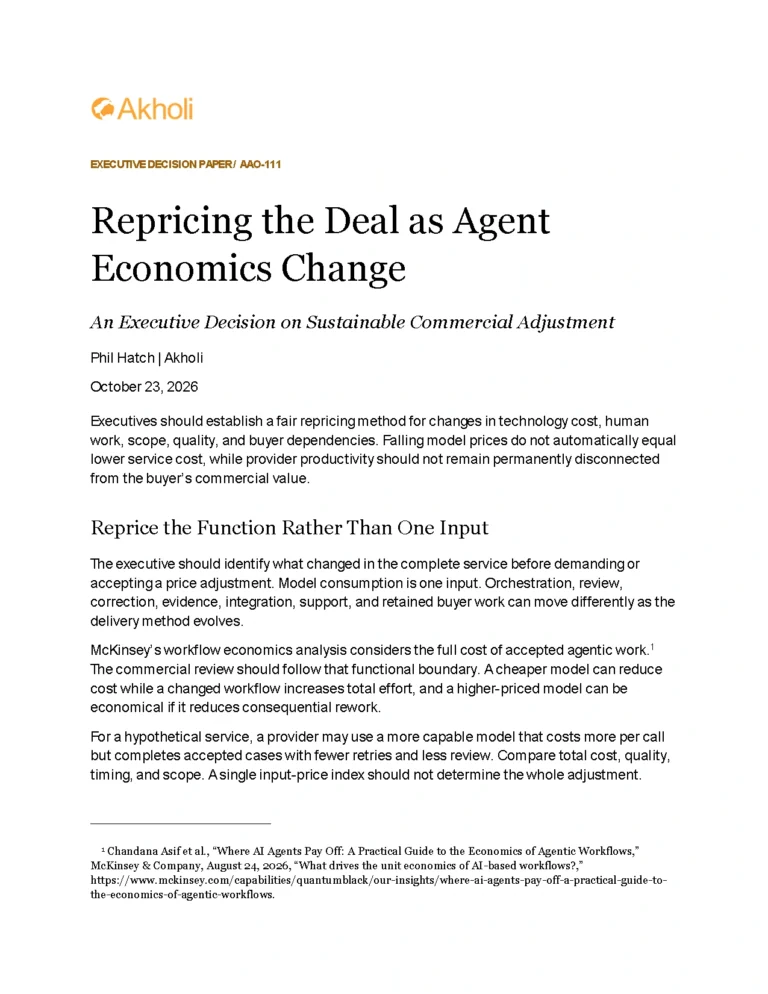
Executives should establish a fair repricing method for changes in technology cost, human work, scope, quality, and buyer dependencies. Falling model prices do not automatically equal lower service cost, while provider productivity should not remain permanently disconnected from the buyer’s commercial value.
Buy-side Boards and Executives Cross-industry · 4 pages
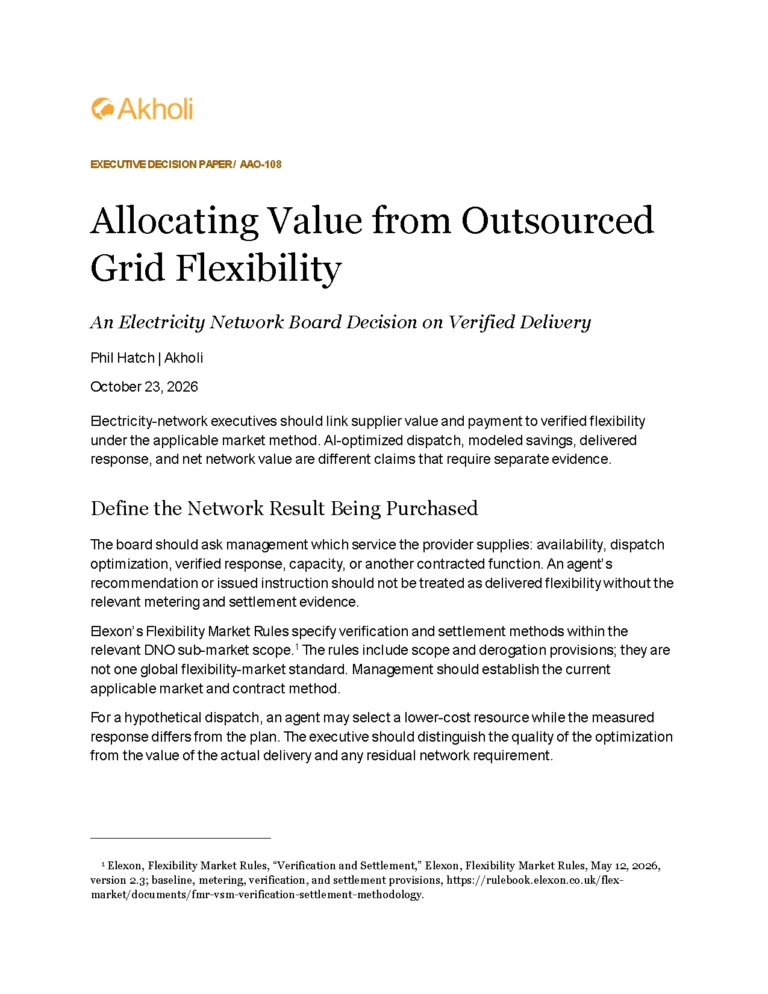
Electricity-network executives should link supplier value and payment to verified flexibility under the applicable market method. AI-optimized dispatch, modeled savings, delivered response, and net network value are different claims that require separate evidence.
Buy-side Boards and Executives Energy and Critical Infrastructure · Other Regulated Industries · 4 pages
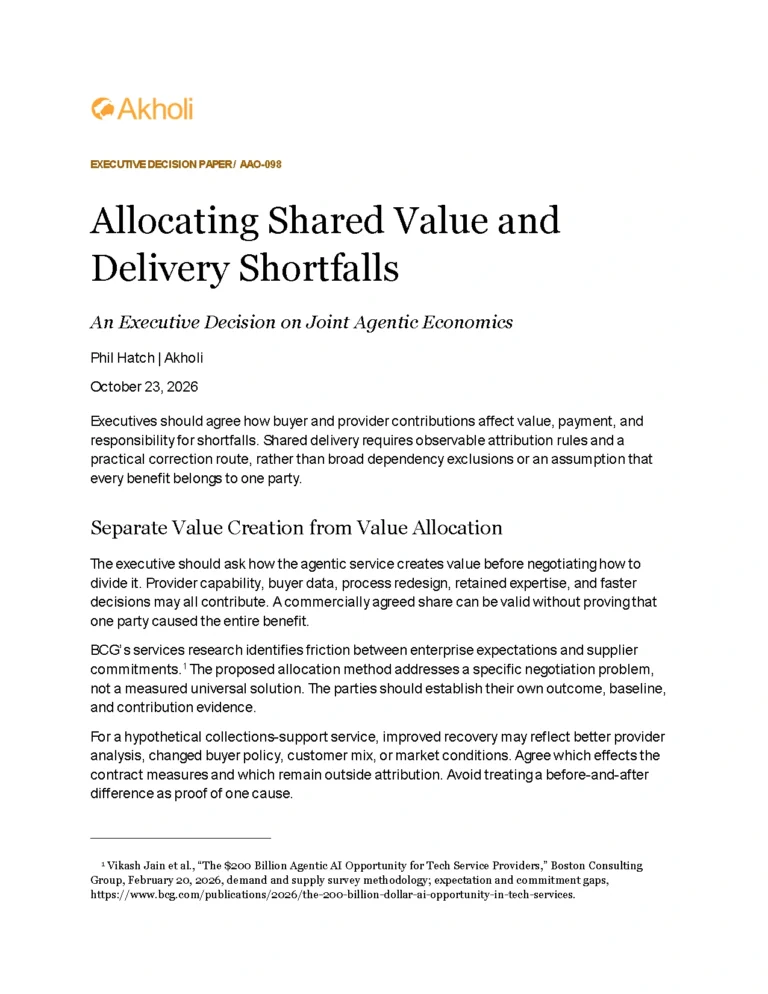
Executives should agree how buyer and provider contributions affect value, payment, and responsibility for shortfalls. Shared delivery requires observable attribution rules and a practical correction route, rather than broad dependency exclusions or an assumption that every benefit belongs to one party.
Buy-side Boards and Executives Cross-industry · 4 pages
Sourcing managers should treat an incumbent renewal as a reassessment of the service now being delivered. Agentic changes can alter authority, human work, cost, evidence, dependencies, and exit capability even when the supplier and contract title remain the same.
Buy-side Delivery and Vendor Managers Cross-industry · 4 pages
Insurance boards should ensure that supplier payment rewards defensible claims outcomes rather than lower payouts, rapid closure, or fewer referrals in isolation. Commercial acceptance must preserve coverage obligations, qualified judgment, customer recourse, and correction.
Commercial managers should agree the eligible population before using an outcome rate to assess or pay an agentic provider. Exclusions, returned work, repeated attempts, unresolved cases, and later reversals can change the meaning of a precise percentage.
Buy-side Delivery and Vendor Managers Cross-industry · 4 pages
Telecom boards should require human escalation to be an operating capability with capacity, context, and authority. A contract promise to offer a human is incomplete if the customer cannot reach someone able to resolve the problem.
Buy-side Boards and Executives Other Regulated Industries · Telecommunications · 4 pages
Executives should approve outcome pricing only after defining the result worth purchasing and the evidence that establishes it. A measurable event can be easy to bill while rewarding delay, incomplete work, or decisions contrary to the buyer’s purpose.
Buy-side Boards and Executives Cross-industry · 4 pages
Sourcing managers should define straight-through processing across the complete purchased workflow and reconcile it to case evidence. An agent-completed step is not an unattended business outcome if people repair, finish, or reenter the work elsewhere.
Buy-side Delivery and Vendor Managers Cross-industry · 5 pages